
 RSS Feed
15
August '26 CHS housing market update: Rates climb, so do sales
Charleston Market Update: Autumn Transition Begins with Strong YoY Gains
The August 2026 data for the Charleston real estate market confirms the expected arrival of the annual autumn seasonal shift. As typical for late summer, weekly contract activity has moved from the peak spring range of 300–350 down to 200–250 per week. However, overall market demand remains comfortably ahead of last year's pace.
Here is your monthly breakdown of the key metrics shaping the Lowcountry market:
1️⃣ Demand Defies Higher Rates
-
Written Sales: Up +5% in August '26 vs. August '25.
-
Closed Sales: Up +1% year-over-year.
-
Under Contract: 241 properties went under contract last week (+12% compared to the same week last year).
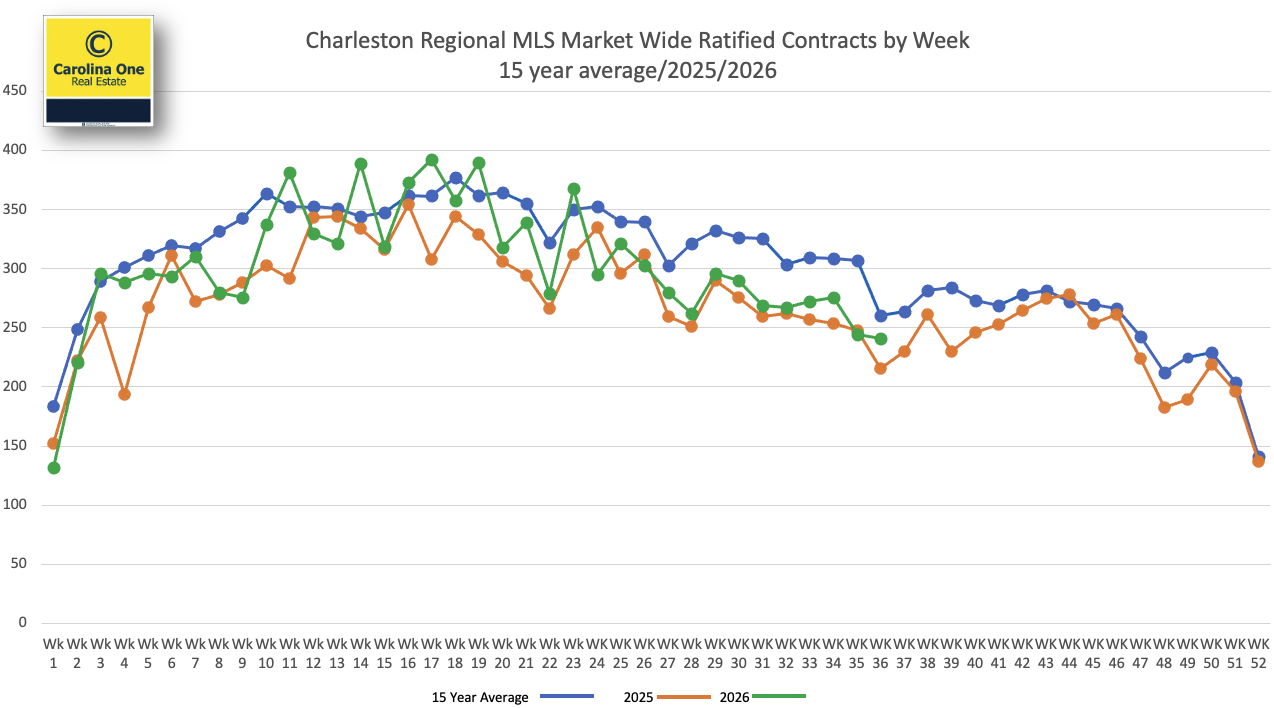
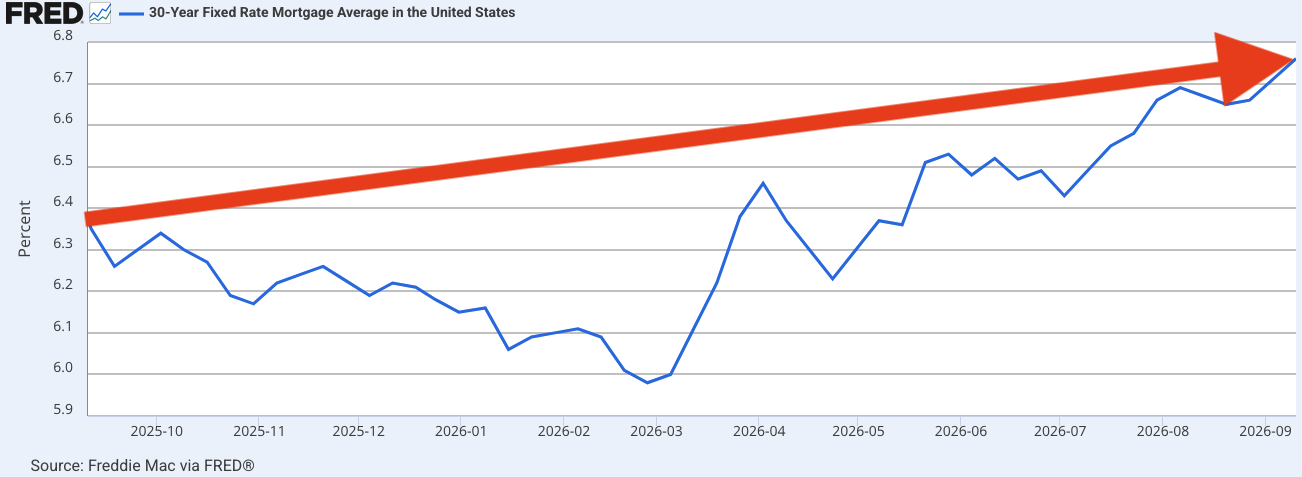
Even with 30-year fixed mortgage rates sitting moderately above where they were 12 months ago, buyer activity continues to show remarkable resilience.
2️⃣ Pricing & Consumer Realities
-
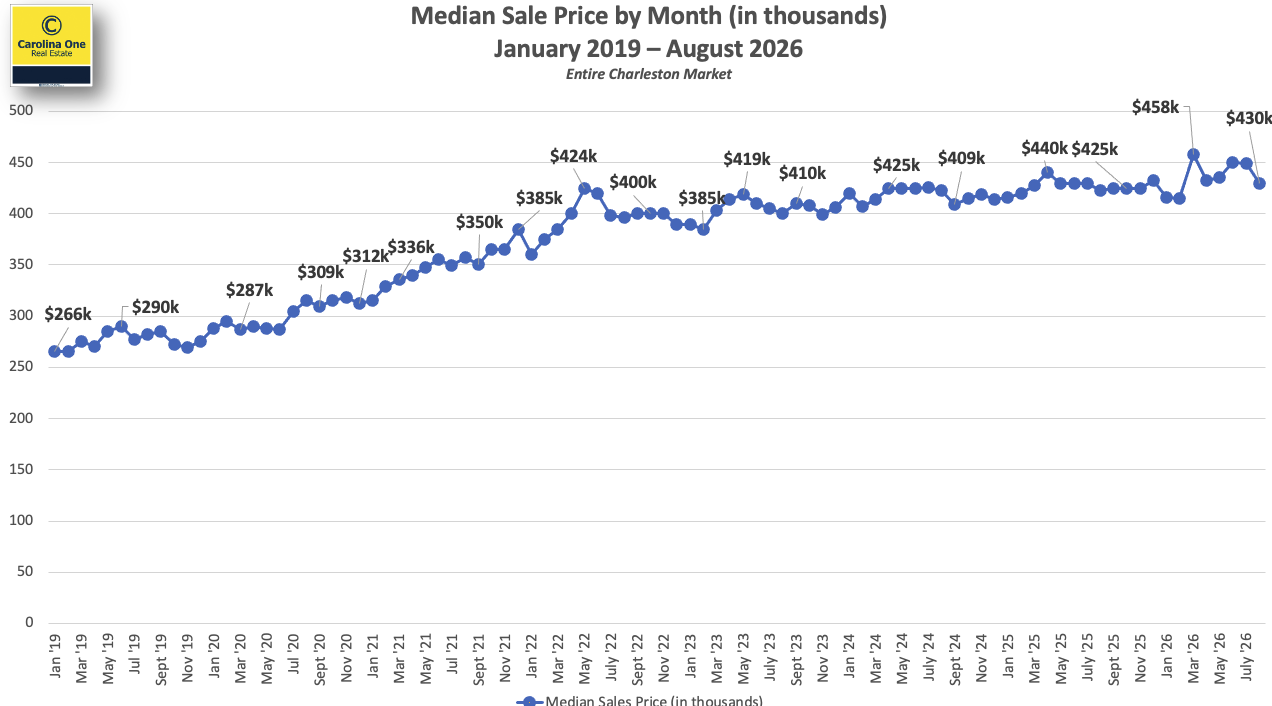
Median Sale Price: Settled at $430,000, maintaining its multi-year baseline band of $400k–$430k.
Price Per Square Foot: Advanced to a new record of $309/sqft.
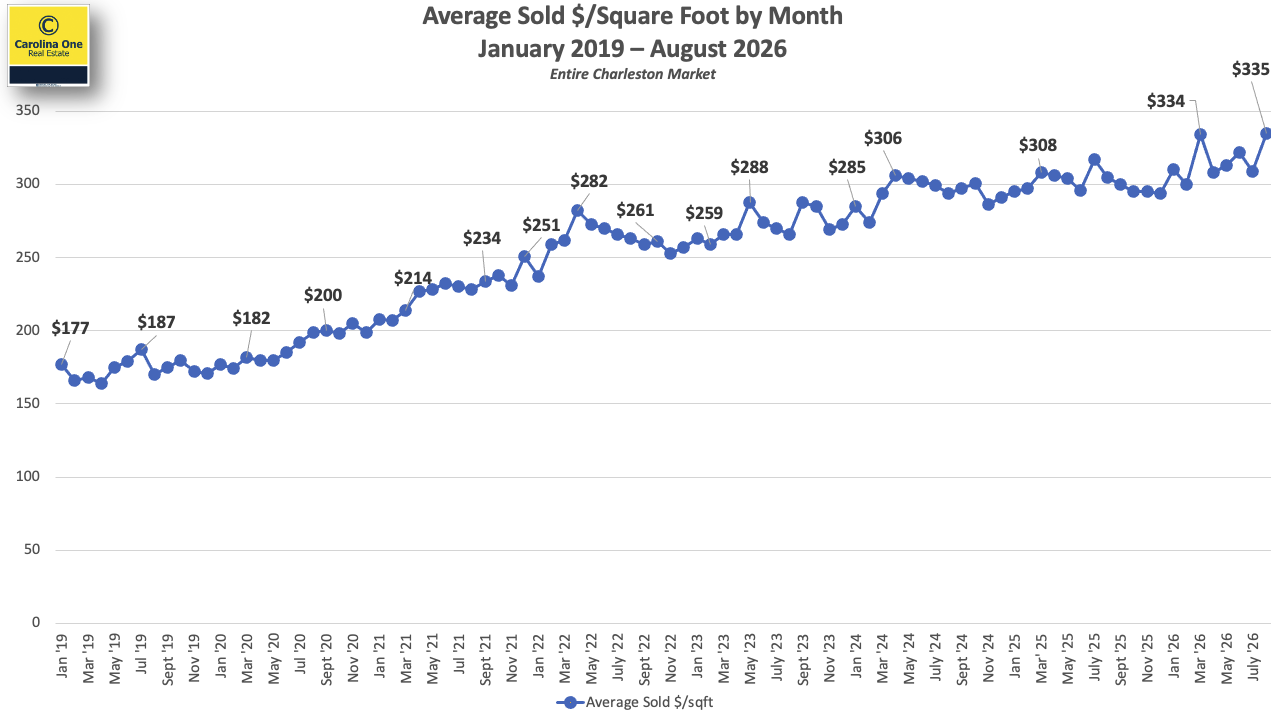
The stable total median price paired with rising price-per-square-foot indicates that while total buyer budgets face an affordability ceiling, buyers are purchasing smaller properties to manage monthly payments—resulting in steady underlying home value appreciation.
3️⃣ Supply & Inventory Gap
Active inventory held near 5,600 listings in mid-August, bolstered by 2,100 new listings hitting the MLS during the month.
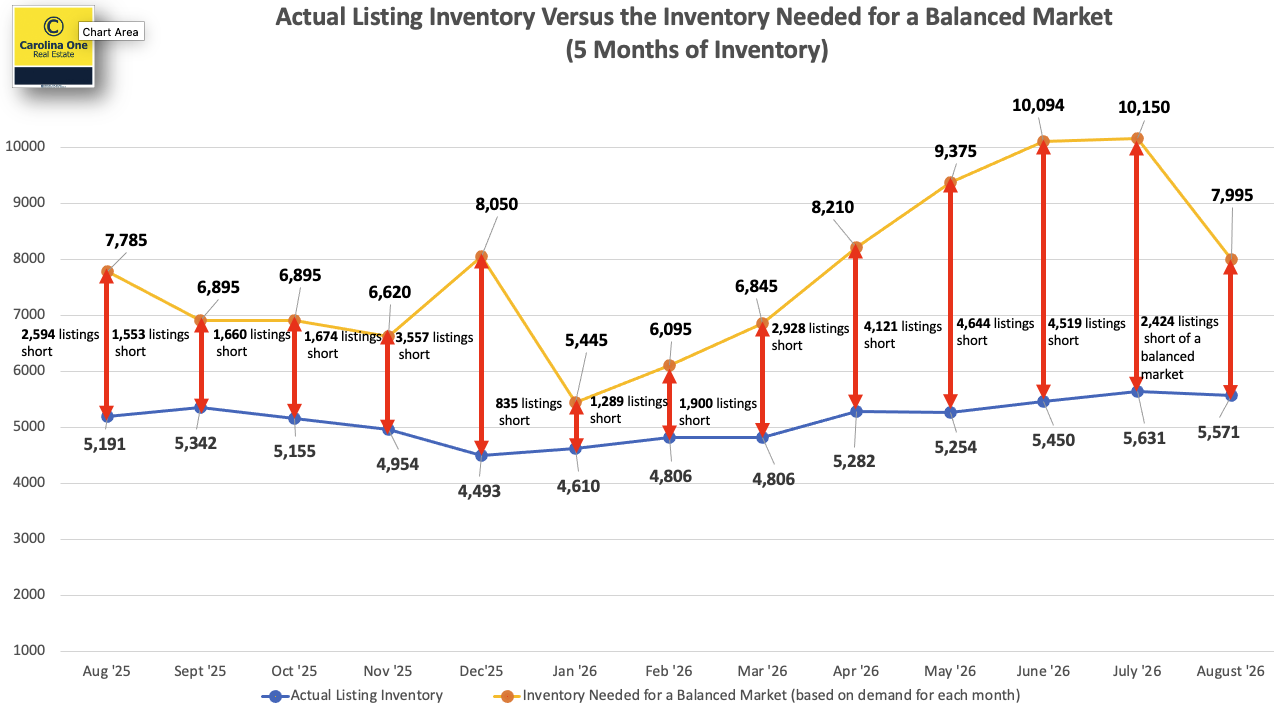
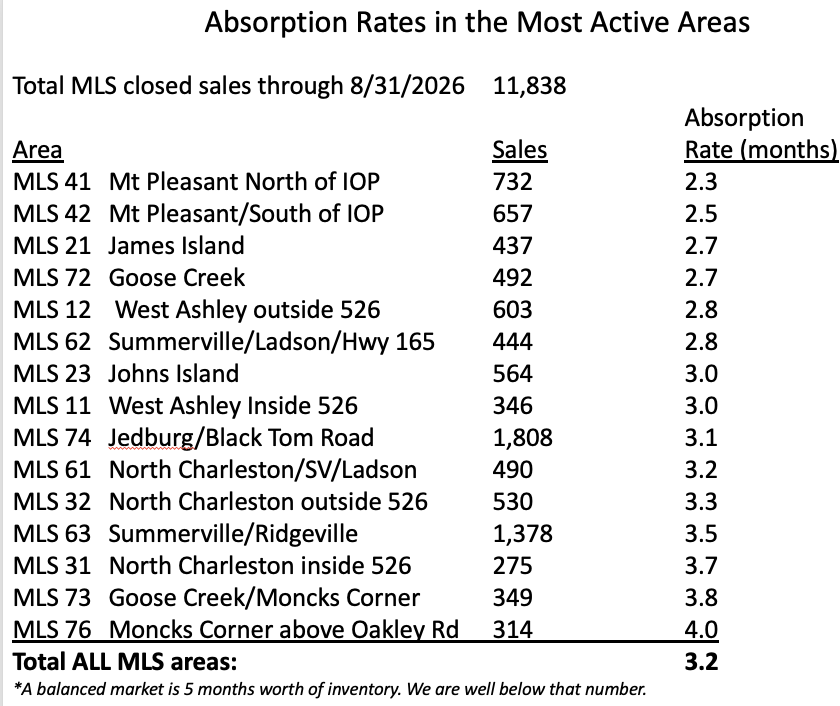
Overall market supply sits at approximately 13 weeks (roughly 3 months), while high-demand sub-markets operate between 2.5 and 3.5 months of inventory. To reach a fully balanced 5-month market, Charleston still requires roughly 2,400 additional listings.
4️⃣ New Construction Breakdown
New builds continue to serve as a critical outlet for inventory shortages, representing 37% of all pending MLS contracts and 34% of completed closings.
-
Berkeley County: 49% of all closings are new construction.
-
Dorchester County: 43% of all closings are new construction.
-
Charleston County: 15% of all closings are new construction.
5️⃣ Distressed Properties Remain Negligible
Distressed sales (foreclosures and short sales) represent 1.4% of active inventory—down from 1.8% in January 2020. Substantial home equity and strong regional employment levels continue to prevent meaningful distress pipeline build-up.
The Bottom Line: Seasonal slowdowns bring a shift in pacing, not a market stoppage. With inventory remaining tight, waiting for lower mortgage rates risks being offset by continued appreciation in price per square foot.
Privacy Policy / DMCA Notice / ADA Accessibility


